



*******************************************
NEW POST DROPS REGULARLY
***************************************
A CONTEMPORARY REFLECTION ON THE LEGACY OF REV. MARTIN LUTHER KING JR.
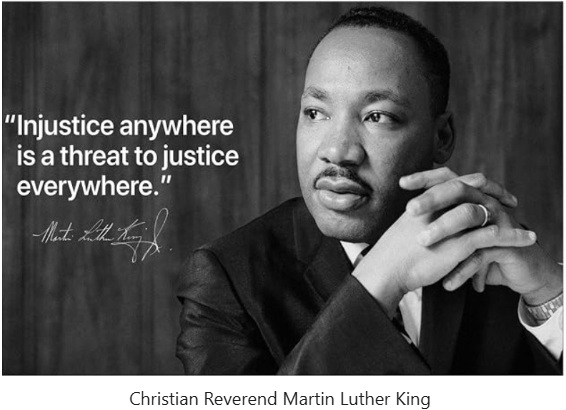
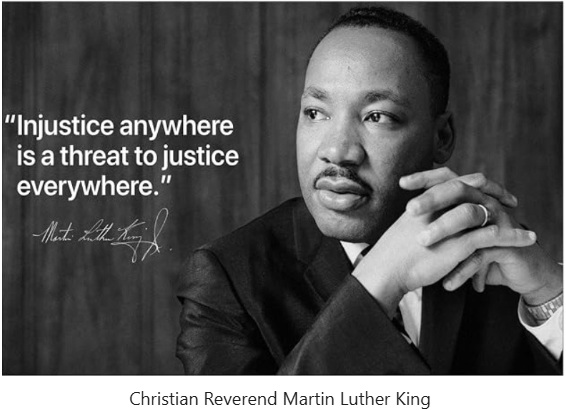
EDITORIAL: Both Christian Reverend Martin Luther King Jr. and Christian Nationalist Charlie Kirk were tragically assassinated, albeit under vastly different circumstances, motives, and historical contexts. Yet, the outcome—the loss of life—remains a sobering constant. What broader insights might we draw from these tragedies? What is the nature and genesis of hatred, envy, and jealousy? How do these destructive forces manifest across societies, transcending socioeconomic, cultural, and ideological boundaries? Why does no segment of humanity appear immune? Furthermore, how might individuals and communities cultivate resilience or “immunity” against such corrosive sentiments? Finally, does the persistence of such tragedies raise profound theological questions about divine will and human agency?
Reflecting on Dr. Martin Luther King Jr.’s journey reveals an inspiring and principled leader—guided by deep faith—who courageously challenged the enduring forces of racism, poverty, and conflict.



**********************************************
Click Here: SOCIAL POLICY (@havahhouseco.bsky.social) — Bluesky

Click Here: SOCIAL POLICY (@havahhouseco.bsky.social) — Bluesky
**********************************************
Fall 2026: Special Coverage
Billy Graham’s ‘Modesto Manifesto’—scorned by skeptics, but let’s get real: its gutsy rules set a gold standard for integrity in ministry
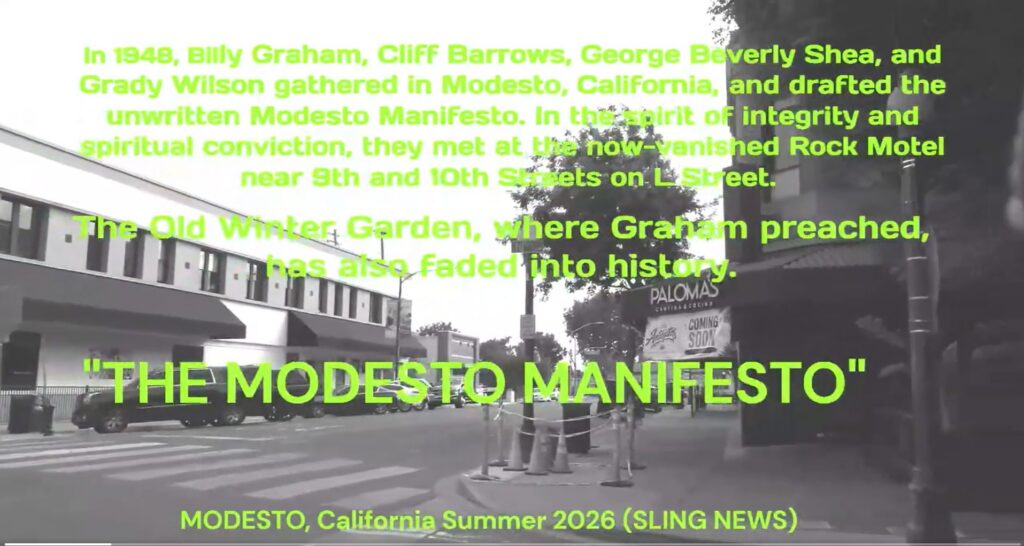
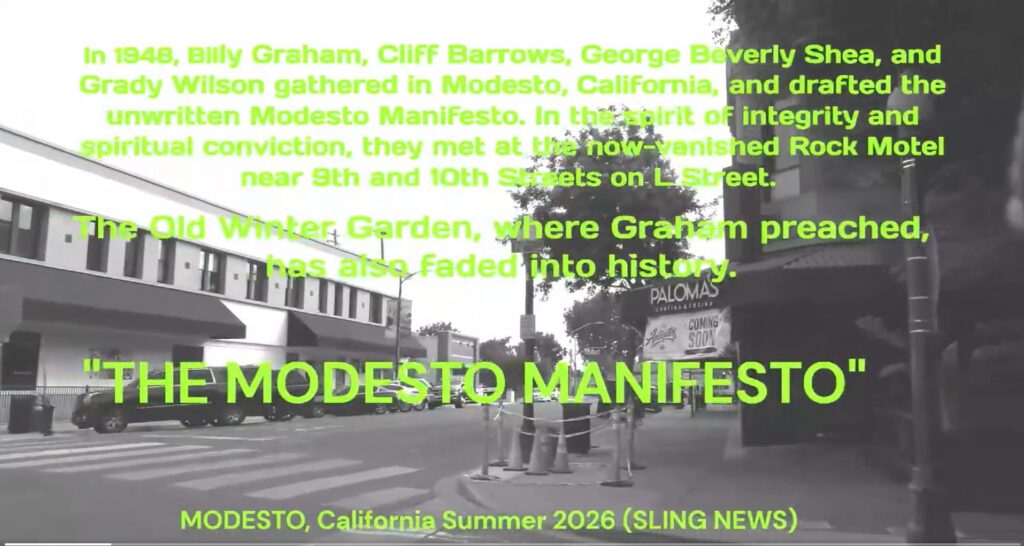
Here’s what the critics miss: In these imperfect (carnal) bodies, Christians are called to radical discipline—and to lead by example
Scripture teaches us to separate the wheat from the chaff: we are not to judge by words alone, for words can be empty, but by deeds and the legacy one leaves behind. Look beyond mere talk—discern the spirit through actions, the fruits they bear, and the roots of their family. A true family of God, though imperfect, it ought to radiate harmony and enduring love. Kindness, integrity, and the building of a respectful and caring family free of foul language and abuse are the ultimate fruits of godly living–this must be evident. At times, even among church members, these virtues are feigned, yet nothing is hidden from God, who knows every heart and will reward each person justly. The church community, though imperfect, is sacred; it is where we learn true repentance and forgiveness together, for we deeply love our brothers and sisters in Christ. The Book of Revelation reminds us that God walks among His people—not a flawless people, but a truly repentant one, for there authentic love is revealed. Those who walk in darkness show themselves through evil deeds—sowing discord, harboring unforgiveness as though they are without flaw, spreading lies and unkind words. Ultimately, every act of malice returns to its source; in seeking to deceive others, they deceive only themselves.
Rather than fall prey to the ‘spiritual traps’ that snared so many of their peers, Graham and his crew (Cliff Barrows, George Beverly Shea, and Grady Wilson) drew a sacred boundary with four spiritual principles.
- Financial integrity: No emotional manipulation, no padded pockets—just clean hands and open (tax/revenues) books entrusted to local committees.
- Sexual morality (“Billy Graham Rule”): Not even a hint of scandal—only faithfulness and respect. Never be alone with a woman who is not your wife. When meeting with professional women, ensure you are accompanied by friends, family, or colleagues.
- Honesty in reporting the number of attendees in church events: No fish stories here—just honest numbers and the courage to let God’s work speak for itself.
- Church partnership: No lone rangers—only humble allies, lifting up local churches rather than tearing anyone down.
**************************************************
Fall 2026: Technological progress is inevitable, yet we firmly uphold the unique and irreplaceable value of HUMAN CLERGY
Spiritual leadership is rooted in empathy, authentic connection, and moral wisdom—qualities uniquely embodied by human clergy. While AI may support logistical needs, it cannot offer the soul, faith, or heartfelt guidance that inspire true community.



**************************************
Special Coverage (Fall 2026) THE TECHNOCRATIC ERA
America’s Leap of Faith—Trump’s Second Term Presidency. Are we witnessing inspired innovation or the rise of a monopolistic oligarchy? Join us as we explore how technocrats and technocratic power are reshaping the soul of our faith-driven democracy.
Episode: Peter Thiel and Elon Musk, Jeff Bezos, Mark Zuckerberg, and Sam Altman
PETER THIEL, originally from Germany and now a naturalized U.S. citizen, calls traditional higher education a “bubble” that kills real innovation and leaves students buried in debt—even though he holds two degrees from Stanford. Thiel has been a major backer of Donald Trump and J.D. Vance, and Palantir Technologies—where Thiel is a key player—landed major government contracts, especially during the Trump years. Recently, Thiel relocated his family to Buenos Aires, buying a $12 million mansion and enrolling his kids in a local school. It is also relevant to acknowledge that Argentina and Germany share a complex history: following World War II, Argentina became a destination for several thousand Nazi war criminals and collaborators, including infamous figures such as Josef Mengele, known as “The Angel of Death.” (Mengele died on February 7, 1979, in Bertioga, Brazil). Given Peter Thiel’s influence in the Trump administration and the broader technocratic approach of Trump’s second term, is Thiel truly promoting the values of American democracy, or is it time to call for greater transparency regarding government contracts with technocratic leaders and a clearer understanding of their political affiliations?
JOSEF MENGELE, sometimes referred to as “The Angel of Death,” resided in Argentina for a period of time and died on February 7, 1979, in the coastal town of Bertioga, located in the state of São Paulo, Brazil. Mengele was a German SS physician and captain at the Auschwitz-Birkenau concentration and extermination camp. Under the leadership of Argentine Archaeologist Daniel Schávelzon, a research team investigated three robust stone buildings deep within Teyú Cuaré Park, close to the Paraguayan border. Their search uncovered German coins dating from 1938 to 1944, alongside shards of German porcelain. Schávelzon theorized that these structures were possibly constructed during the war as clandestine refuges for senior officials, should Germany fall. Importantly, there is currently no evidence suggesting any intent to orchestrate the Third Reich’s resurgence from South America.
**********************************************
BREAKING NEWS: Tyler Robinson to Stand Trial; State Pursues Death Sentence
*******************************************
Slingshot Survey
Should Tyler Robinson receive the death penalty if convicted of murdering Charlie Kirk?
********************************
College Students in California Reflect On The Death Penalty Debate
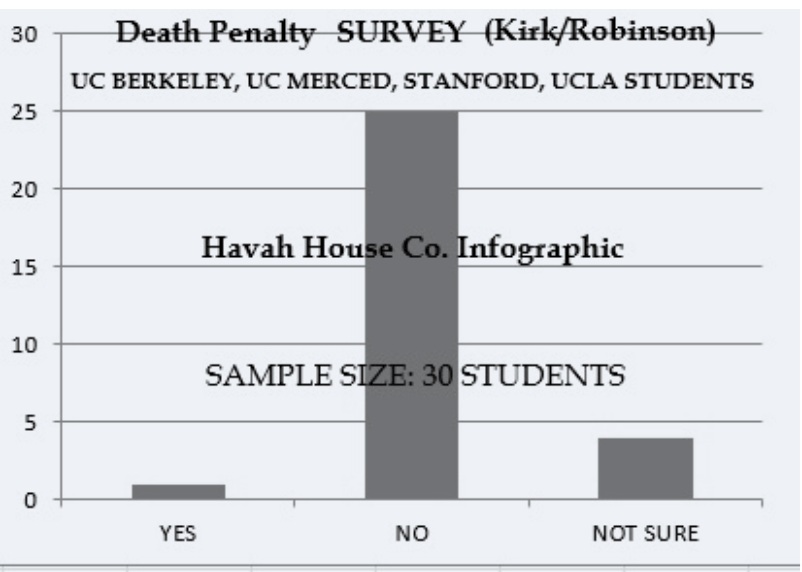
The survey conducted among college students in California regarding the death penalty provides valuable insights into contemporary attitudes toward capital punishment, especially in light of the case involving Tyler Robinson and the alleged murder of Charlie Kirk. With a sample size of 30 participants, the findings indicate significant opposition to the death penalty, with 25 students expressing disapproval.
Random Sample: 30 California College Students (UCLA, Stanford, UC Merced, UC Berkeley)
No= 25 Yes= 1 Not Sure= 4
California college students respond to whether Tyler Robison should receive a death sentence if convicted of murdering Charlie Kirk
Should Tyler Robinson receive the death penalty if convicted of murdering Charlie Kirk?
Should Tyler Robinson receive the death penalty if convicted of murdering Charlie Kirk?
Should Tyler Robinson receive the death penalty if convicted of murdering Charlie Kirk?
********************************************
Death Penalty Survey (Charlie Kirk v. Tyler Robinson)
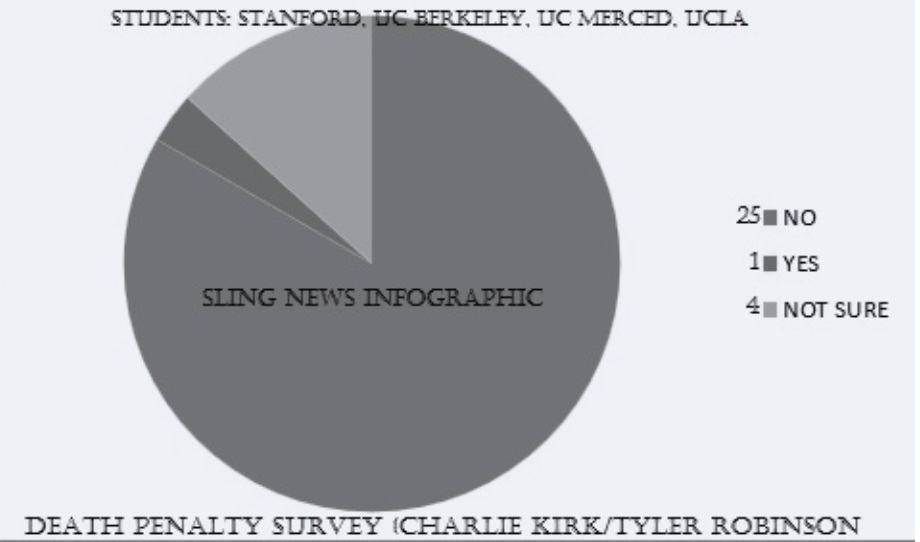
This overwhelming majority contrasts sharply with the single supporter of capital punishment in the group, while four students remained undecided. It is important to acknowledge the limitations of this survey, particularly its small sample size, which may not accurately represent the broader demographic of college students throughout California. Additionally, the timing of the survey—conducted during the pre-trial phase—adds complexity to the results.
Public opinion on high-profile legal cases can be heavily influenced by media portrayals and changing societal attitudes, which may evolve as the trial progresses. The intention to revisit this topic with further data collection after the trial of Charlie Kirk versus Tyler Robinson reflects a thoughtful approach to understanding how the unfolding circumstances may impact public sentiment. This longitudinal perspective will provide a more comprehensive view of the factors influencing students’ opinions on the death penalty.
**********************************************
Tyler Robinson, 23 y.o., awaiting trial for the murder of Charlie Kirk
Trial Date: 2026-2027. Location: Housed in the highest security unit (SHU) in Utah.
Isolation Measures:
– Designed specifically for serious offenses.
– Rigorous monitoring of daily activities, including sleeping and eating habits.
– Meals delivered through secure slots to reduce inmate interaction.
Cell Conditions:
– Dimensions: approximately 6×10 or 8×10 feet; no windows.
– Basic facilities include bolted sinks and toilets, designed to prevent self-harm.
Inmate Restrictions:
– Complete segregation from the general population.
– No access to communal recreation areas.
– Limited to six books from approved providers.
Legal Counsel Rights:
– Allowed to consult legal counsel, but meetings are under strict regulations.
– Consultations occur in designated rooms with glass separations, using telephones for communication.
Does Utah allow the death penalty? Yes
Utah stands among the 27 states that still endorse this controversial practice. While over 50 inmates have faced execution in the past, the diminishing rate of executions in recent decades raises important questions about the ethics and effectiveness of the death penalty. Since the U.S. Supreme Court reinstated capital punishment in 1976, Utah has executed seven individuals, highlighting a trend of decreasing reliance on this extreme measure. (Source: Utah, KUTV, Utah Capital Punishment Laws by Lyle Therese A. Hilotin-Lee, J.D. | Legally Reviewed by FindLaw Staff | Last reviewed December 04, 2024, Utah Commission on Criminal and Juvenile Justice-gov.)
********************************************
Voice for justice: Stephen F. Rohde on the impacts of capital punishment
- SLING NEWS EXCLUSIVE: When reflecting on the implications of capital punishment, we cannot ignore voices like that of Stephen F. Rohde, who articulately highlights the profound issues surrounding capital punishment.
- Stephen F. Rohde is a former constitutional lawyer, lecturer, and political activist. He serves as the chair emeritus of the ACLU Foundation of Southern California and was the immediate past chair of Bend the Arc, a Jewish organization focused on justice.
- Rohde has also held the position of President of the Beverly Hills Bar Association and founded Interfaith Communities United for Justice and Peace. He was the former chair of Death Penalty Focus. Rohde currently hosts the podcast “Speaking Freely: A First Amendment Podcast with Stephen Rohde.” He is the author of American Words of Freedom and Freedom of Assembly (part of the American Rights series).
****************************************
Special Coverage
U.S. v. Jeffrey Epstein
“When scandal fail to sway: Trump’s enduring (public) support sets his case apart”
EDITORIAL: The Trump saga is remarkable not just for the weight of its accusations, but for the electorate’s willful indifference to them. Trump’s ever-changing denials have shredded his credibility, yet his brash, unfiltered persona still captivates millions. Twice, voters have brazenly dismissed credible allegations at the ballot box, exposing how political spectacle routinely trumps the measured scrutiny democracy demands. Consider recent revelations: President Trump alerted Florida law enforcement about Jeffrey Epstein and Ghislaine Maxwell. According to an FBI report, Trump bluntly told authorities, “Everyone knows he’s been doing this,” and labeled Maxwell “evil,” pressing police to monitor her closely. Some political opponents scramble to downplay this move, but it’s a rare instance of Trump backing words with action—a gesture that, regardless of motive, cuts through the noise. In the end, it’s not merely Trump’s theatrics or the public’s complicity at stake, but a test of what kind of political culture we are willing to accept.
FORENSIC PROFILE
The average “victim” of Jeffrey Epstein
Jeffrey Epstein’s victims were predominantly young women and girls from economically disadvantaged, working-class, or lower-income backgrounds, rather than those from affluent families. Epstein and his associates systematically sought out individuals facing personal, familial, or financial hardship. Testimonies and investigative reports consistently reveal that recruitment efforts were concentrated on those from troubled or underprivileged environments, often utilizing financial incentives or promises of financial support to gain trust and compliance.
The average “client” of Jeffrey Epstein
Regarding the individuals most commonly associated with Epstein, records indicate that his social and professional networks consisted largely of men in positions of significant wealth and influence, including billionaires, senior Wall Street executives, prominent academics, and leading international politicians.
So far, no religious leaders have been implicated in connection with Jeffrey Epstein
There is no documented evidence suggesting a notable presence of religious figures among these associates; instead, the majority were high-profile business leaders, financiers, and public personalities.
************************************************
Special Coverage
California Drought And Water Management
Politicians from both parties, including President Trump, have long pledged to deliver more water to California’s farms and cities. But Jay Lund warns that the State’s elaborate system is no “giant faucet”—moving water is a feat of logistics and policy, not simply turning a valve. “There’s always going to be some dissatisfaction, especially among Central Valley farmers”, he said. In other words, managing California’s water is a balancing act, and quick fixes are rare.
And, yes, California is required by law to allow large volumes of fresh water to flow from the Sacramento-San Joaquin Delta to the Pacific Ocean. While this practice is controversial—especially among farmers and water officials who view it as a lost resource during dry periods—the primary purpose is to safeguard threatened species such as the Delta Smelt and to preserve the ecological balance of the Delta. These environmental releases help keep saltwater from moving inland and carry away contaminants, but critics believe improved water management and storage could reduce the need for such extensive outflows.
“California’s water network: A decentralized system. In California, the water doesn’t flow from a single faucet”
Dr. Jay Lund, Vice-Director of the Center for Watershed Sciences at the University of California, Davis
California’s agricultural dominance rests not on favorable weather but on a vast, meticulously engineered water infrastructure. With almost no rain falling during the vital growing season, the State’s $50 billion farming industry is largely propped up by an intricate network of aqueducts, reservoirs, and groundwater basins. “It’s not summer rain that makes California’s agriculture so productive”, said Jay Lund, Vice-Director of the Center for Watershed Sciences at the University of California, Davis. “It’s our ability to move and manage water on an enormous scale.”
While Dr. Jay Lund calls California’s water management system among the world’s best, he notes that it remains far from perfect. The State’s history, he said, is one of constant adaptation. Early European settlers, expecting summer rains, instead found dry fields and were forced to invent new ways to irrigate. Out of necessity, farmers joined forces to build irrigation networks that would have been impossible for any one landowner to afford—laying the groundwork for today’s powerful water agencies. Lund draws historical parallels, noting that while the Romans pioneered aqueducts, California’s engineers now move water across far greater distances.
Groundwater, Dr. Jay Lund said, is the State’s main reserve—banked during wet years and tapped during drought. But decades of over-pumping, especially in the San Joaquin Valley, have caused water tables to collapse and even dried up Tulare Lake. The crisis prompted the 2014 Sustainable Groundwater Management Act, which gives local agencies until 2040 to restore balance. “We’ve come a long way from the days of lead pipes,” Lund said, crediting modern materials for safer, more reliable water delivery.
California’s economic muscle and organizational sophistication put it at the forefront of water management, Jay Lund said, but the State’s environment—especially its native fish and wetlands—remains at risk. While cities have adapted and agriculture continues to thrive, the struggle to balance water for people, farms, and ecosystems is ongoing. In places like the Sacramento Valley, many farmers have started collaborating with environmental groups, recognizing that healthy rivers and robust fish populations are crucial for everyone’s future.
California’s Water Network–One of the system’s strengths, Jay Lund added, is its decentralized management. No single official—not even the governor—holds absolute control. Instead, decisions are debated among dozens of agencies and stakeholders, a process that may slow progress but also prevents hasty mistakes.
From the parched deserts of the south to the lush wetlands of the north, California’s water system is a marvel of modern engineering, operated by dozens of agencies. The challenge: ensuring that water flows where and when it is needed most, often moving it vast distances to bridge the gap between wet and dry regions, and between seasons of plenty and years of drought. “The system must function as a unified whole”, Lund said. That means moving water not just between seasons, but across years—using storage, groundwater, and a labyrinthine network of canals and aqueducts. The result is a system composed of thousands of miles of aqueducts, hundreds of reservoirs, and an untold number of groundwater basins.
Keeping this intricate machine running is expensive: annual costs run into the billions, even as the benefits to California’s economy are measured in the millions. Lund notes that other regions—such as the Pacific Northwest, with its vast hydropower grid, or the Missouri River’s extensive management network—face similar challenges, but few match California’s scale and complexity. To manage this complexity, Lund and his colleagues have developed sophisticated computer models that simulate the State’s web of water uses and supplies. These models have become essential for forecasting droughts, testing conservation strategies, and evaluating the impacts of a warming climate. “Modeling allows us to test ideas at a fraction of the cost of real-world implementation,” Lund said. “Building new infrastructure can cost billions, but with computer models, we can explore solutions for just thousands.”
********************************************
Special Coverage
Californians react to President Trump’s plan to redirect Northern water, South (Exclusive Survey)
President Trump is implementing a plan to redirect water from the San Joaquin Delta/Sacramento region to central California farmlands, drawing criticism from some groups over potential environmental impacts on endangered fish species. Trump claims to have a plan to address water shortages by turning on a “giant faucet/giant valve” in Northern California and diverting ice- or mountain-fed water from the north to Southern California. But California’s water system, far from being operated by a “giant faucet,” is instead a labyrinth of reservoirs, snowmelt, and carefully orchestrated transfers. There is no single lever to reroute the state’s water supply at will. Instead, experts—perhaps disappointingly—insist that water management is a matter of legal statutes, scientific analysis, and extensive infrastructure rather than a whimsical plumbing fixture.
We asked California residents whether President Trump’s claim of solving water shortages by simply “turning on a giant faucet/giant valve” in Northern California and diverting mountain-fed water southward is feasible. We specifically explored whether respondents believe the President is providing genuine leadership or disseminating misinformation on this complex issue. Preliminary responses are presented below.
*************************************************************
Special Coverage
Art History
“Daniel Edwards and Michelangelo: Masters in dialogue across time”
In an exclusive interview with Sling News, sculptor and art professor Daniel Edwards critically examines his career, foregrounding his dual identity as both an artist and a socio-political provocateur. He incisively interrogates the unique properties of clay and wax—especially in bust-making—while casting a discerning eye on a spectrum of other media, exposing the formidable technical mastery and critical insight required to elevate raw material into provocative, resonant art. Edwards encourages aspiring artists to engage with his mentorship, yet candidly underscores that genuine artistic distinction demands not just talent, but relentless discipline and sustained critical inquiry. While recognizing the mythos of innate genius, he is unabashed in attributing true excellence to an uncompromising work ethic. Reflecting on the ageless legacy of Michelangelo, Edwards both honors the canonical master, framing his achievements as a standard that is at once inspirational and provocatively daunting for sculptors across generations.
Sculptor and Prof. Daniel Edwards, California State University, Stanislaus
************************************************
Special Coverage (Pandemics and Climate Change)
Hanta Virus and Nipah Virus
***********************************************************
Copyright 2026©Havah House Co. Policy Terms: the content of this website is a work of authorship and an intellectual property of Havah House Co. No portion of its content may be performed, reproduced, or used by any means, or disclosed to, quoted, or published in any medium without the consent of the owner.