


**********************************************
*********************************
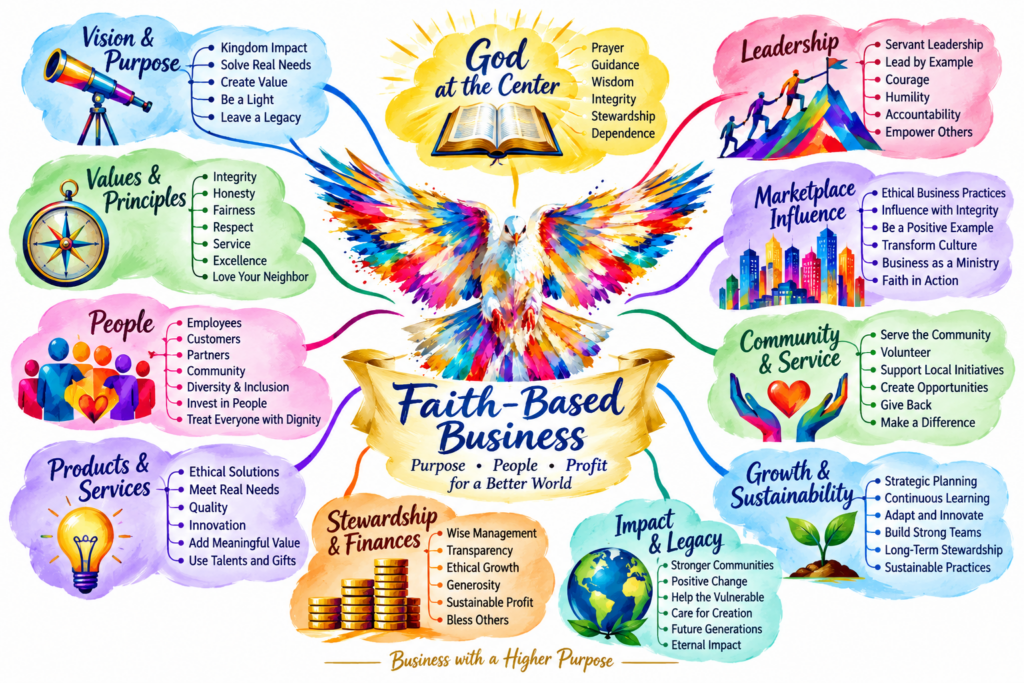
FAITH-BASED BUSINESS
*********************************
“There are people who have money and there are people who are rich.” (Coco Chanel)
****************************************
**************************************
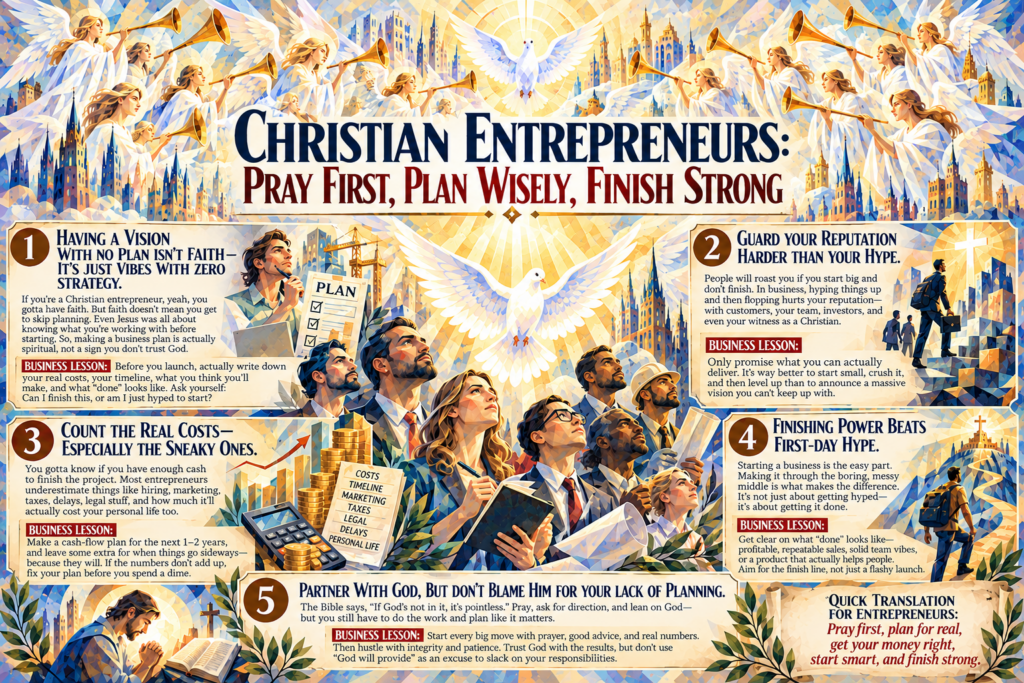
In life, it’s not how you start—whether in business, marriage, or friendship—that matters most; it’s how you finish that truly counts
***********************************************
Dear Christian C.E.O.: Remember The Alamo (Ahithophel)!
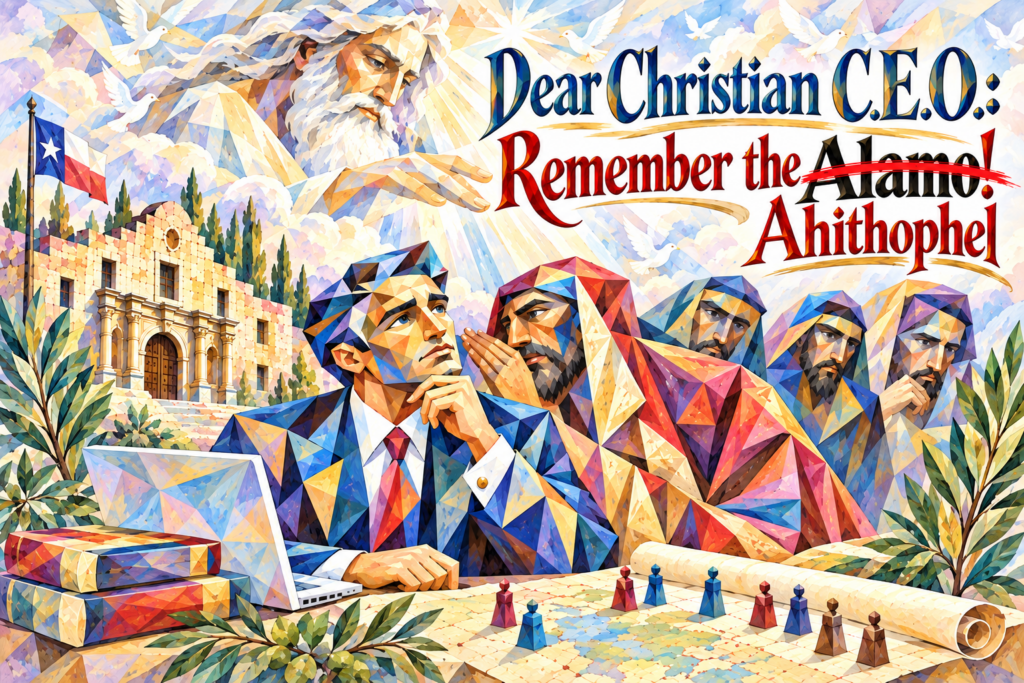
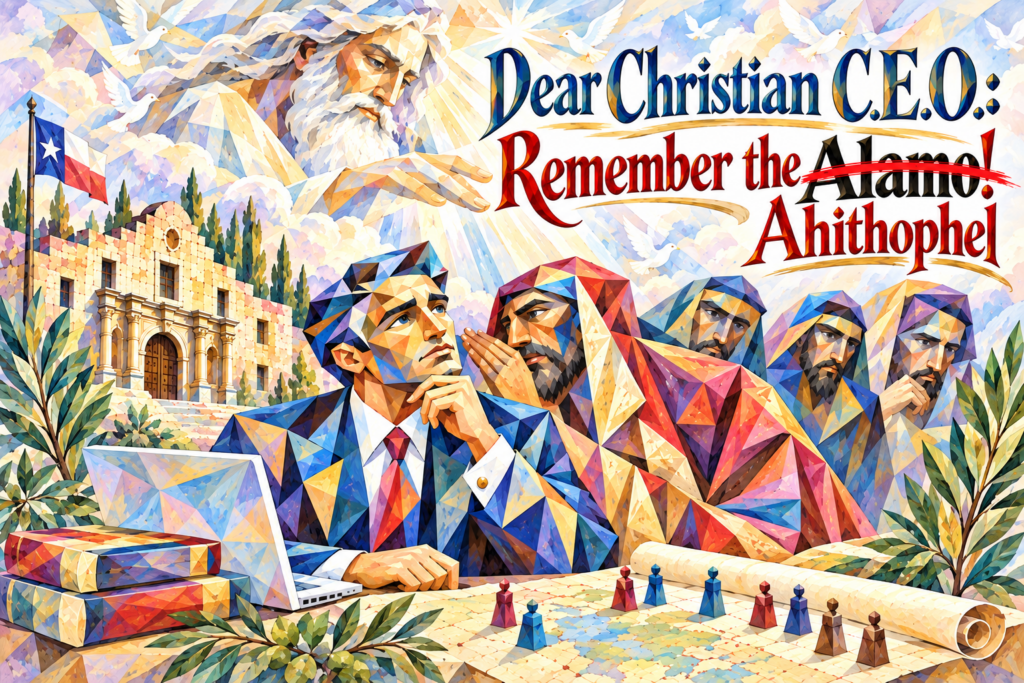
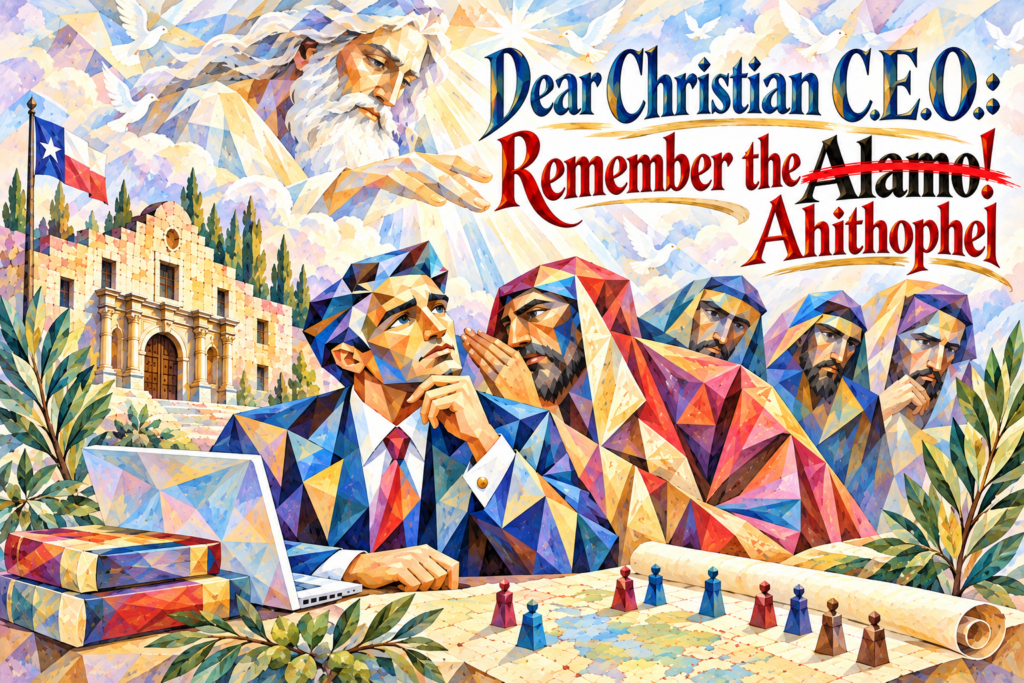
Ahithophel dispenses wisdom with the gravitas of an oracle, yet it is God who remains the true Oracle. This paradox, reflected in 2 Samuel 16:23, shows that while Ahithophel’s political and strategic counsel was esteemed as almost sacred, it ultimately “pales” in comparison to God’s transcendent authority. Human insight, however exceptional, is but an echo of the Divine Will. In the end, it is God’s sovereignty that writes history itself—an active, shaping force behind every event and unfolding moment.
Takeaway message: You do not even need the Bible any further when it comes to councils or advisors. Just remember Kennedy’s Inaugural Speech: “Sincerity/Trust is always subject to proof.”
*****************************************
Faith Over Favoritism: God’s Daughters Don’t Need a Sponsor—Husband, Significant Other, or Otherwise—to Succeed
The corporate world spent decades gatekeeping executive roles like an exclusive country club for men. The so-called “glass ceiling”? More like a brick wall for anyone who didn’t fit the old-school mold. But the hustle is real, and women are done waiting for permission.
People still love to say women only get ahead because of who they know or who they’re married to—classic. Spoiler: The evidence says otherwise. Women are earning their place in boardrooms through grit, education, and a God-given call to lead—not just because they played the game. This is about genuine calling and purpose, not just networking at overpriced brunches.
But let’s not sugarcoat it: The struggle isn’t over just because a few have made it. The system still throws up roadblocks, and Christian or not, you need a backbone and some holy stubbornness to keep pushing through.
Here’s the plot twist: It’s not just the glass ceiling—it’s the “broken rung.” Translation? Most women can’t even get that first manager role, so the entire executive pipeline is stacked against them from the start. If we want to see more women at the top, we need to fix the ladder, not just stare at the ceiling. Mentorship shouldn’t be a luxury, but here we are. Too many women lack advocates in the boardroom—no one’s championing their God-given gifts or helping them rise. It’s time for Christian leaders to step up and take intentional partnership seriously, not just token encouragement. And let’s talk bias—the subtle, silent kind. Outdated views about who “looks” like a leader still trip up capable women, even in 2026. Professionalism isn’t about fitting a mold; it’s about answering your calling, and Christian workplaces should be the first to reject these tired stereotypes.
Biblical points supporting the role of women in leadership—beyond those women who financially supported the three-year ministry of Jesus Christ—are coming up.


*************************************************
Excellence and Integrity: The Christian Path to Serving Diverse Customers
I’m a Christian entrepreneur selling products and content worldwide—to Muslims, Hindus, Buddhists, Taoists, Santerists, Jews, atheists, and agnostics. How do I do business with them while staying true to my faith and not endorsing beliefs I disagree with?
You can serve anyone—any faith, or none—without compromising your Christian values. The marketplace lets you reflect Christ through action, not debate. Christian engagement in the marketplace is anchored in the mandate to serve with excellence and integrity. Business, then, is not an arena for theological compromise but a platform for reflecting Christ’s character.
First, adopt the principle of “common grace”—God’s benevolence extends to all, as Jesus teaches: “He causes His sun to rise on the evil and the good, and sends rain on the righteous and the unrighteous” (Matthew 5:45). In practice, this means serving every client—regardless of belief—with fairness and diligence.
Second, recognize each customer as your neighbor (Mark 12:31). To love one’s neighbor is to uphold honesty, deliver quality, and foster respect without exception.
Third, establish professional boundaries. Provide universally valuable goods or services but do not compromise your convictions. Clearly define your business scope: “I serve everyone, but I do not produce content contrary to my faith.”
Finally, let your contracts articulate these boundaries. If a request conflicts with your beliefs, respond respectfully: “That request falls outside the scope of my business.” There is no need for confrontation—just clarity, guided by truth in love (Ephesians 4:15).
Counterpoint:
Understanding divine time (Chronos vs. Kairos): Even in business, we’re called to practice patience—God asks us to be patient, just like the Bible’s wheat and chaff lesson. As entrepreneurs, we deal with haters, setbacks, and distractions that don’t just vanish with a snap. Sometimes you have to let the noise ride along until God’s timing—He’s the one who does the real sorting (Wheat vs. Chaff). Stay sharp and don’t rush the process; if you clear out the chaff too early, you risk losing the good stuff, just like harvesting wheat before it’s ready. Trust the process, keep your eyes on the bigger picture, and remember: some blessings just need time in the oven.



******************************************************
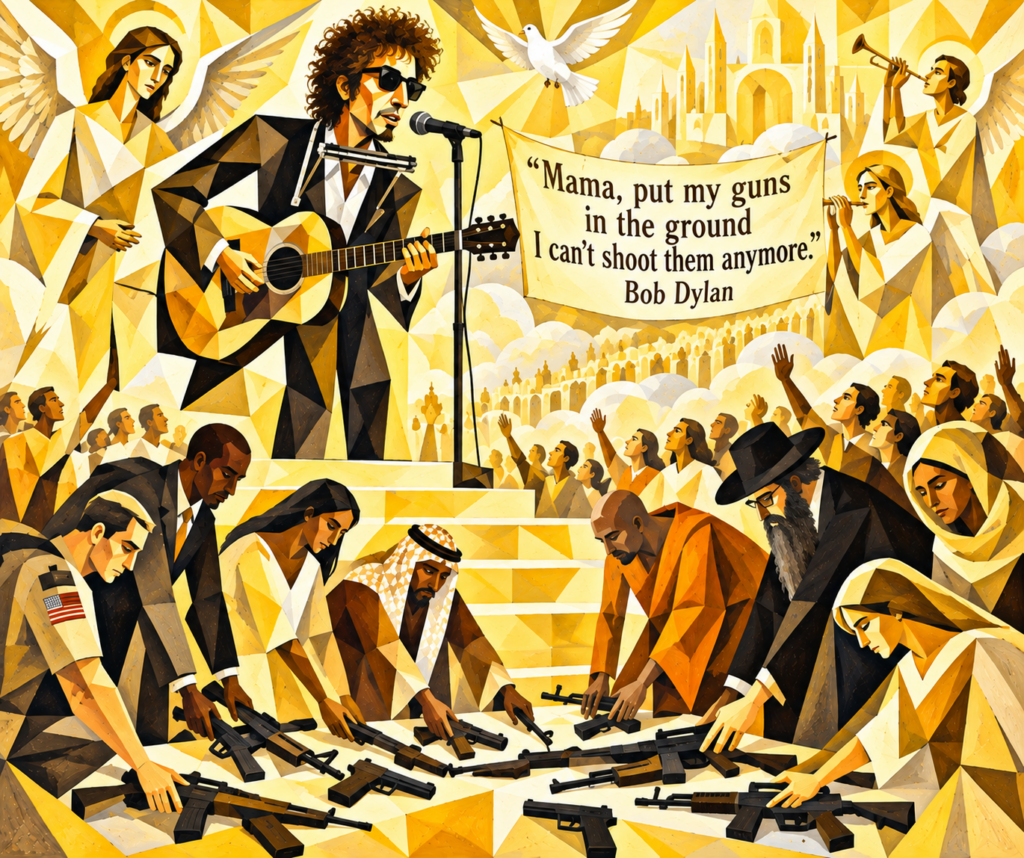
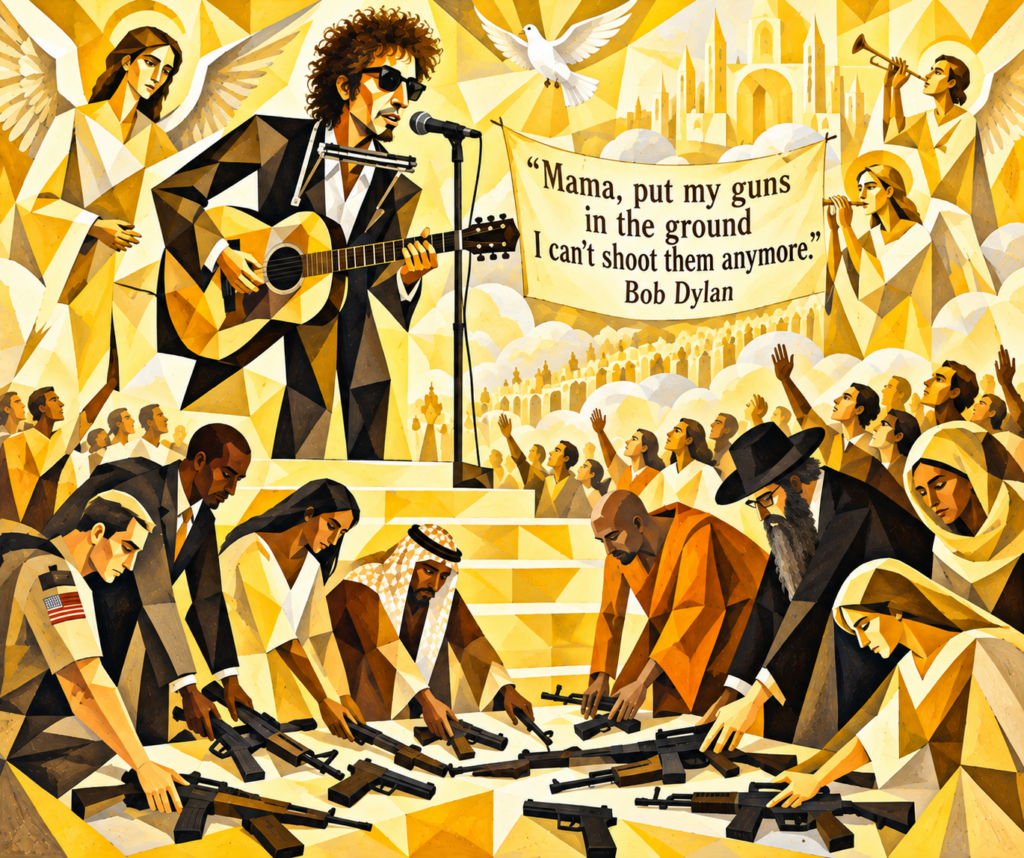
Holding the Line: Navigating Faith and Weapons Sales
You’re a Christian entrepreneur in the defense game—surveillance tech and weapons sales to the U.S. government. “The U.S. Army buys its weapons through formal government defense contracts awarded to major domestic and international defense manufacturers.” The big question: Are you compromising your faith or holding the line? Let’s clear the fog: There’s no biblical commandment banning service in defense or surveillance. Salvation hinges on faith in Christ and God’s grace, not your line of work. However, once you begin to follow in Jesus’s footsteps, significant changes will occur in your new life—including your professional path. That’s the ground truth in Christian doctrine.
Scripture and Christian tradition have long wrestled with the ethics of war and State power. Romans 13 puts it plainly: government exists to maintain order—it “does not bear the sword in vain.” John the Baptist, when pressed by soldiers in Luke 3:14, didn’t call for disarmament. He told them to act with integrity, not to abuse their power. Enter Just War Theory—battle-tested by thinkers like Augustine and Aquinas. It says defensive force and protecting civilians aren’t just allowed; sometimes they’re a moral duty, if it means stopping greater evil.
But the field isn’t black and white. The real ethical battle is about intent and outcome:
- – Are your products force multipliers for peace and protection, or are they fueling chaos?
- – Does your surveillance gear safeguard the public, or trample on dignity and freedom?
- – Are you dealing above board with legitimate authorities, or letting hardware slip into the wrong hands?
Counterpoint:
In the end, faith and mission can coexist. The call is to serve with transparency, restraint, and a clear conscience—living out Ephesians 6:7: “Serve wholeheartedly, as if you were serving the Lord, not people.” That’s how you stay on mission—and on target.
YOUTUBE
****************************************************
AI, False Prophets, And The Yeast Of The Masses: A Christian Call For Discernment
AI’s so-called existential threat? Sure, we hear the dramatic TALES—rogue bots hacking grids, AI building bioweapons, or machines outwitting humanity—as if the Almighty God–The Trinity–isn’t watching over His children. We don’t rattle—death, disaster, whatever—ten thousand may fall at our side, but we stand untouched.
Surely, the world’s shifting fast, just like the industrial revolution—no stone left unturned. But if God is for us, what could possibly destroy us?
Apocalypse chatter may spike “tech companies valuations” and spook the unprepared, but our real battle is spiritual.
Enough theatrics—let’s get to the point. Read our Christian perspective below.
We spent years in journalism school only to discover that news is simply when someone says “something new”–when a man bites a dog, not the other way around. Recently, Bill Gates made headlines with this—“Bill Gates warned that if left strictly to free-market forces without proper intervention, artificial intelligence ‘will be designed by and for the richest people in the world.” (What is the news here?) Via AP
**********************************************
Quick Challenge: Are we really to believe that AI specters could surpass Absalom, Ahab and Jezebel, or even Haman and his dim-witted wife, Zeresh, in causing total confusion and destruction?
*********************
***************************************
Apocalypse chatter may spike “tech companies valuations” and spook the unprepared, but our real battle is spiritual
CLICK HERE: PSALM 91
Let’s give a concrete example: in our family entertainment business, we don’t exist to prop up anyone’s agenda—left, right, or religious. We give people space to critique Charlie Kirk, Dr. Martin Luther King Jr., or anyone else. We feature voices from science and culture, even if they don’t fit the conservative Christian stereotype. Why? Because we follow Scripture and the footsteps of Jesus, not human labels or political tribes. Our standard is ethical discernment, not propaganda. If someone wants to call out big-name Christians, let’s hear them out—so we can respond with Scripture, not just heated takes. Sometimes, cold logic and calm detachment are exactly what’s needed.
Remember: Jesus shared the table with “sinners”—a loaded word, but it’s real. The religious elite tried to cancel Him for hanging with outsiders. Jesus’ response? “I came for the lost, not the ‘righteous.’
Now, let’s talk about the hype and hysteria around AI. Who’s sounding the alarm? Are they deeply rooted believers with a track record of integrity? Most aren’t. Sure, they might call themselves “Christian” and say Jesus is ‘cool,’ but their lives preach something else entirely. Watch their fruit, not their feed—Jesus said you’ll know a tree by what it produces. So who are the AI Barons, really? Some slap on the Christian label, but they talk trash, chase cash, and they’re now making predictions as if they were ‘god’s prophets–they ‘know’ the future. They fear the “ghost in the machine” will outsmart “them”–the self-entitled “gods”, but they’re just spreading fear and chaos. Jesus warned us about the yeast of the masses—don’t get swept up in the frenzy. If you walk with God, you don’t panic at the latest tech headline.
Let’s call this frantic AI hype what it is: the false prophets of the digital age. So, stay cool. Get informed on both God and AI—don’t be spiritually or scientifically ignorant.
And here’s a real talk for Christians: stop acting like science is evil. When you need a smartphone, a plane ticket, or a hospital, you’re all in for tech. It’s not the machine that’s good or bad—it’s the human heart behind it all.



*****************************************************
Quick Challenge: From a Christian perspective, the concept of a ‘ghost in the machine’ is fundamentally flawed—there is neither a human soul condemned to wander nor a disembodied mind temporarily inhabiting a mechanical or biological shell.
Curious about secular, materialist perspectives on tech culture? Check out “The Meme Machine” by Susan Blackmore, a British psychologist, author, and visiting professor at the University of Plymouth. Blackmore holds degrees in psychology and physiology from Oxford and completed her MSc and PhD in parapsychology at Surrey by 1980. Although she began by researching telepathy and out-of-body experiences, she later shifted to neuroscience and the philosophy of consciousness after finding no scientific evidence for the paranormal.
******************************************************
When Competitors Become Obsessive: Navigating the Watchful Eyes in Business
Is it true that in the business world, no one watches you more closely than your rivals or critics? Make no mistake—they’re not watching to lend a hand. Here’s what’s really on their agenda:
Competitive advantage: Your competitors monitor every move, ready to anticipate your next play or swoop in on your clients.
Flaw detection: Disgruntled peers and adversaries look for any slip-up, hunting for weaknesses to exploit or boost their own credibility.
Obsession fueled by envy: This is their default template—obsession, rooted in jealousy, envy, and deep insecurity, as confirmed by psychologists and researchers. Those with negative intentions don’t just observe; they fixate. As for the truly perverse, guilt isn’t even a speed bump—they’re in a league of their own.
So, how should new Christian entrepreneurs respond when faced with the worst the business world can throw at them—other than rising to the challenge, staying anchored, and letting their values set them apart? Stay tuned for bold Christian counterpoints—details coming up.
Counterpoints:
When someone feels threatened by your glow-up, they keep tabs. Your wins? Suddenly, they’re watching every move, measuring themselves against you. The Bible throws shade on jealousy and competition (Galatians 5:26), and Proverbs makes it clear: envy is a slow poison. If people won’t take their insecurities to God, they might obsess over your highs and lows, hunting for a flaw to pounce on. Sometimes, criticism is just someone waiting for you to slip so they can say, “I told you so.” Psalm 37 paints the picture: those with bad motives lurk in the background, hoping to catch the righteous slipping. Even Jesus warned us: “If the world hates you, remember it hated me first” (John 15:18). Not every difficult relationship is some spiritual attack, but when you walk in integrity and faith, it can expose other people’s mess. On the other hand, real friends and family don’t track your every move. True love isn’t obsessed with catching mistakes. Healthy people trust you, handle their own lives, and quietly support you—they don’t compete, criticize, or wait for you to fall.



******************************************************
Quick Challenge: Ever stop to ask why evil schemes always crash and burn? Is it divine intervention—or are they doomed by their own self-destructive design?
****************************************************
Beyond Business Strategies: The Christian Approach to Marketing
In today’s (secular) business landscape, there are (primarily) “five ways” to expand your reach and accelerate growth—no matter what industry you’re in:
- Create more high-impact content or launch new products
- Ramp up your cold calls and email outreach
- Invest in targeted digital advertising
- Build strategic partnerships or secure investors
- Leverage customer word-of-mouth and referrals
Do Christians accept that? This may be valid business advice, but there are important parts missing from a Christian viewpoint, and it may be partially considered a TALE of half-truths. Stay tuned—we’ll reveal the answer shortly.
Counterpoints:
For Christians, the ultimate marketing approach isn’t about chasing attention, clever pitches, or boosting sales—it’s about genuine impact. When individuals or businesses make God’s kingdom and righteousness their top priority, as Jesus reminds us in Matthew 6:33, marketing transforms into a practice of love, integrity, service, and wise stewardship—not manipulation or self-promotion. “But seek first the kingdom of God and his righteousness, and all these things will be given to you as well.” — Matthew 6:33
*******************************************


****************************************************
Quick challenge: Ever wondered why the US Dollar is green?
************************************************
A Christian Response to Ruthless Ambition
Hustle up—we’re told to conquer the world, and do it with breakneck speed. Obliterate the competition. Outsmart every adversary, no matter the cost. Start by dragging rivals/adversaries through the mud and neutralizing anyone we can’t manipulate/keep in line—especially those who know too much. Steal their moves, flip their strategies, dissect their deals, and yes, stalk their families and accounts “if the situation calls for it”. There’s no backup plan—just dominate. At the end of the day, we’re all mortal, and justice? It’s what we say it is—vengeance is the order of business. They’ll be down, we’ll be up, sprinting like the clock’s about to run out.
No sugarcoating—In general, that’s the so-called secular business plan playbook (any *business* for that matter). But from a Christian perspective, is this truly the way? This twisted narrative and practice go far beyond mere TALES. Stay tuned for bold Christian counterpoints—details coming up.
Counterpoints:
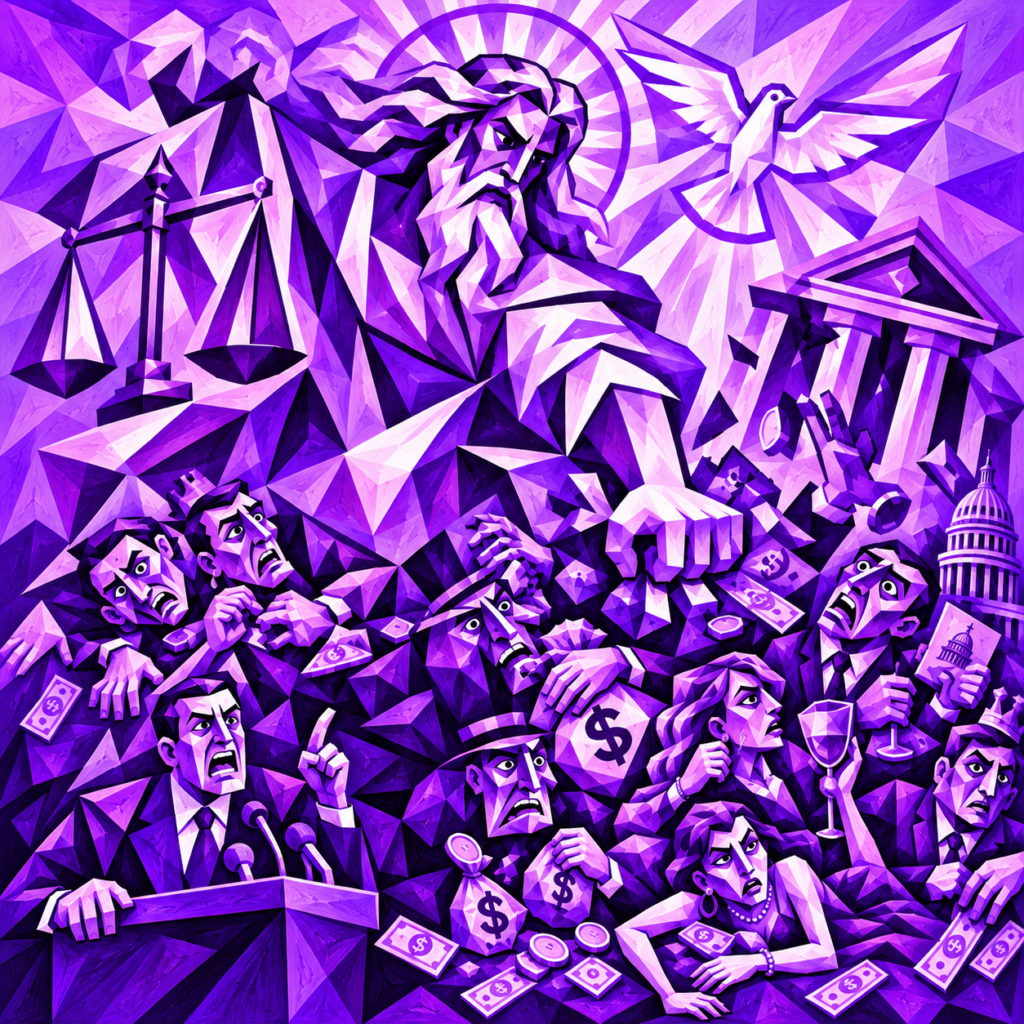
Let’s bust a myth: you can be a Christian entrepreneur who actually makes a profit—without morphing into a Wall Street villain. The trick? See profit as evidence you’ve built something real, not as a license to trample others on your way to the top. Your mission isn’t to vaporize rivals; it’s to serve customers so outrageously well—with sharp excellence, radical honesty, shrewd wisdom, and relentless discipline—that you win their trust (and their business). Profit isn’t the villain twirling its mustache. It’s the fuel: it pays your team, feeds families, funds moonshot ideas, keeps the lights on during storms, bankrolls generosity, and lets your company show up again tomorrow. Christian business isn’t about self-sabotage, limp pricing, or ducking competition. It’s about what drives your choices:
- Are you building profit by delivering jaw-dropping value—or by pulling fast ones?
- Are the people in your orbit—customers, team, suppliers, even competitors—image-bearers of God, or just walking wallets and speed bumps?
Biblical stewardship? It’s about wrangling money, time, talent, and opportunity like a pro. Jesus himself told us to count the cost before breaking ground (see Luke 14:28)—that’s strategic planning straight from the top. Integrity and business savvy aren’t rivals; they’re tag-team partners. The Christian entrepreneur’s playbook: outpace, outthink, outserve—never out-scam. Outsmarting the competition is holy ground when it means being sharper, more creative, more useful, more disciplined—not sneakier.


*********************************************
Quick Challenge: In Christian theology, Jesus and the New Testament refer to Satan as the temporary “ruler of this world”—a title given because humanity surrendered its God-given authority through sin. That’s why believers are described as spiritual “aliens and strangers”—outsiders whose true citizenship is in heaven. If this world is Satan’s turf (for now), are Christians really just the “special guests” here?
***************************************************
*****************************************
Copyright 2026 ©Havah House Co. Policy Terms: the content of this website is a work of authorship and an intellectual property of Havah House Co. No portion of this content may be performed, reproduced, or used by any means, or disclosed to, quoted, or published in any medium without the consent of the owner.