**************************************
***************
*************************************
A Christian Woman’s Guide to Boundaries and Legal Protection
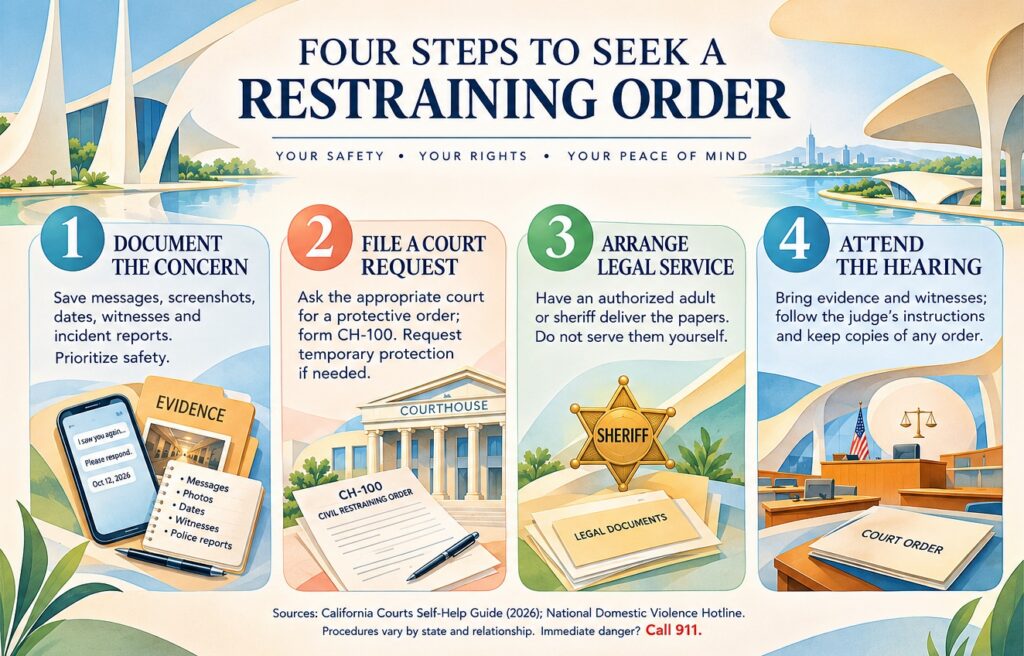
When Safety Is Concerned: “Restraining Orders”
Once a restraining order is issued, any form of contact from the respondent may be considered an act of aggression.
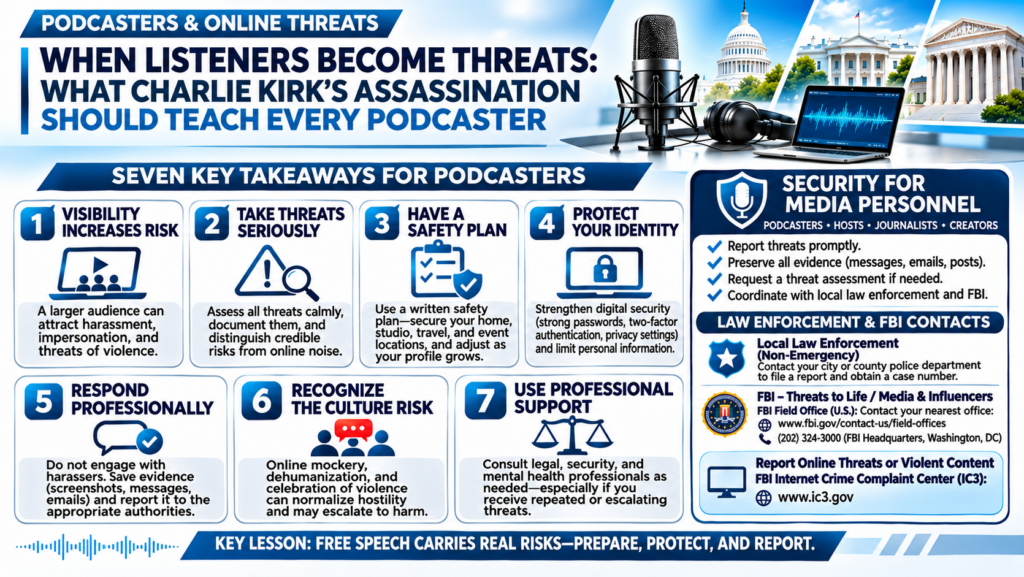
If you or your legal counsel have issued a restraining-order notification, it signifies the gravity of the situation and may pertain to an individual whose behavior is manifestly dysfunctional. You may be confronted with a party who has developed an unhealthy fixation or obsession directed toward you. Consider whether you are experiencing harassment, stalking, threats, or a persistent sense of insecurity. If so, ensure that all relevant evidence—such as messages, calls, encounters, dates, and witness accounts—are thoroughly documented, as such documentation is critical in both legal and clinical contexts.
If the conduct is immediate, threatening, or escalating, it is imperative to contact law enforcement without delay, consistent with the right to seek protection under the law as guaranteed by the Due Process Clause of the Fourteenth Amendment to the United States Constitution. Otherwise, deliberate on the matter with prayerful consideration and consult with your spouse. Jointly determine the appropriate course of action, which may include instructing your attorney to issue a formal legal notification or to pursue a restraining order under applicable state and federal statutes. In many instances, the establishment of a clear legal boundary may be sufficient to resolve the matter.
A Legal and Physical Boundary
Under such circumstances, in consultation with your spouse, extended family, and legal counsel, the issuance of a restraining-order notification or pursuit of appropriate legal remedies constitutes a prudent and necessary protective measure. Such action is consistent with the right to security of person, as protected by the Due Process Clause of the Fourteenth Amendment and relevant state constitutional provisions. In numerous cases, a formal legal notice suffices to establish unequivocally that the conduct in question is unwelcome and will not be tolerated under the law.
*********************
ADDENDUM
Mental illness should not automatically be used to explain cruelty or violence—people can be cruel and mean (perverse) regardless of mental illness. Ultimately, it comes down to one’s character and violent instinct
Most people living with mental illness are not violent and can live peacefully in their communities. Cornell’s research summary emphasizes that most are not dangerous, while Harvard Health notes that treatment and psychosocial support can improve quality of life and reduce harm. Mental illness and harmful behavior can coexist, but a diagnosis alone does not establish someone’s character or explain a cruel act.
******************************
Copyright 2027 ©Havah House Co. Policy Terms: the content of this website is a work of authorship and an intellectual property of Havah House Co. No portion of its content may be performed, reproduced, or used by any means, or disclosed to, quoted, or published in any medium without the consent of the owner.